White-label SaaS · 0→1
Delivery Tracker
A white-label tracking product that let retailers own the post-purchase experience, built on a normalised status model spanning 406 delivery partners.

Role
Did all the product design on Delivery Tracker end to end pre-release, taking over from the agency originally hired to build it.
Team
Two front-end teams and Metapack’s back-end engineers, plus one product manager and one programme manager. Before release, once the Creative Director had joined, I hired a junior designer and a contract product designer. The wider design team of five picked up post-release optimisation across the Metapack backlog, not Delivery Tracker alone.
What I owned
All the product design pre-release end to end: workshops with leadership, a design sprint, wireframes, the full concept and an original component library.
What shipped
Live for ASOS, H&M, Barbour and The Royal Mint.
Outcome
Cut customer delivery enquiries by 40%; won Innovation at the World Post & Parcel Awards 2021.

The tracker in a retailer’s own brand: one status vocabulary across 406 delivery partners, space the retailer can use to sell, and a place for support, returns and feedback.
Context
Metapack sells delivery software to retailers. Once a parcel left the warehouse, the shopper was sent to a carrier’s website, on a page the retailer did not control.
That produced “Where’s my order?” enquiries in volume, each a contact-centre interaction on an order already paid for. Metapack put the cost at around £5 an enquiry when selling to retailers.
The carrier pages mostly showed the status the retailer already had, in logistics vocabulary a shopper could not read.
Director, User Experience
·
Metapack
·
October 2019 – February 2022
Constraints
406 delivery partners, each with its own status vocabulary, granularity and reliability. Royal Mail, Evri, DHL, UPS and hundreds of smaller carriers describe the same events in different words.
Data quality was outside the product’s control. Some carriers scan often and report cleanly; others go quiet for days. The design had to hold in both cases.
Decision
Answer the shopper’s question properly, and let the enquiry reduction follow rather than chasing it directly.
Carrier status codes were translated into plain language before they reached the page. A shopper read what had happened to their parcel; the carrier’s code was mapped once per partner onto the normalised status model.
Where data was thin or stale, the page showed the last known scan with its timestamp, so an old status never sat there looking current. That was what designing for certainty meant: the shopper always knew how fresh the answer was.
Trade
Carrying any retailer’s brand meant the product could not have a strong one of its own. Defaults were pared back until a basic theme of logo, typography, colour and tone could carry a retailer’s identity with no engineering involved. Everything expressive was designed out.
Translation is permanent. Plain language across 406 delivery partners makes every new partner and every changed status code a content decision someone has to keep right. That maintenance was the cost of the shopper never interpreting a carrier’s vocabulary.
Process
Reviewed competing tracking products and analysed how tracking behaved across carriers and retailers, then defined the normalised status model: one set of tracking events that 406 partner vocabularies mapped onto.
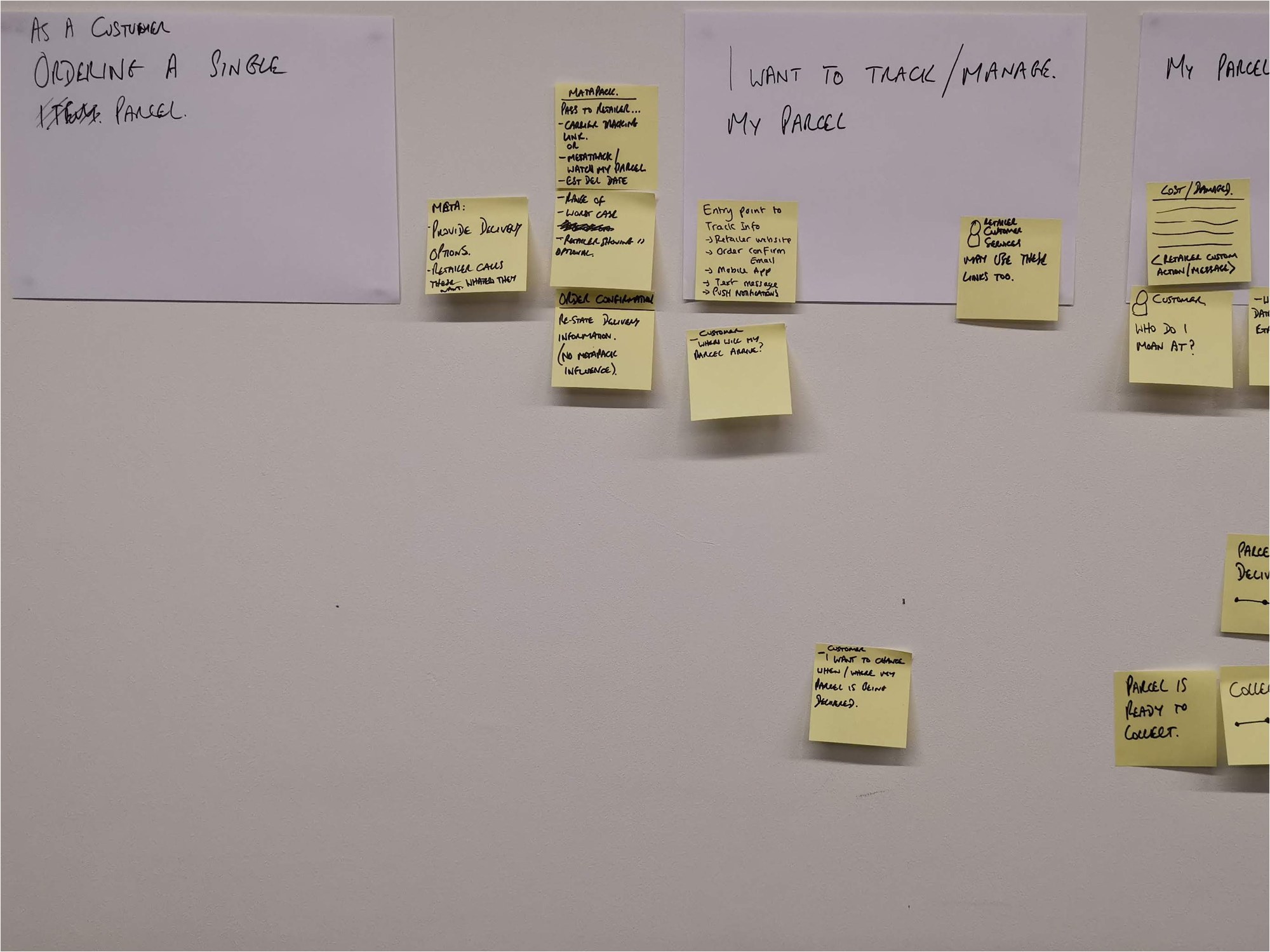
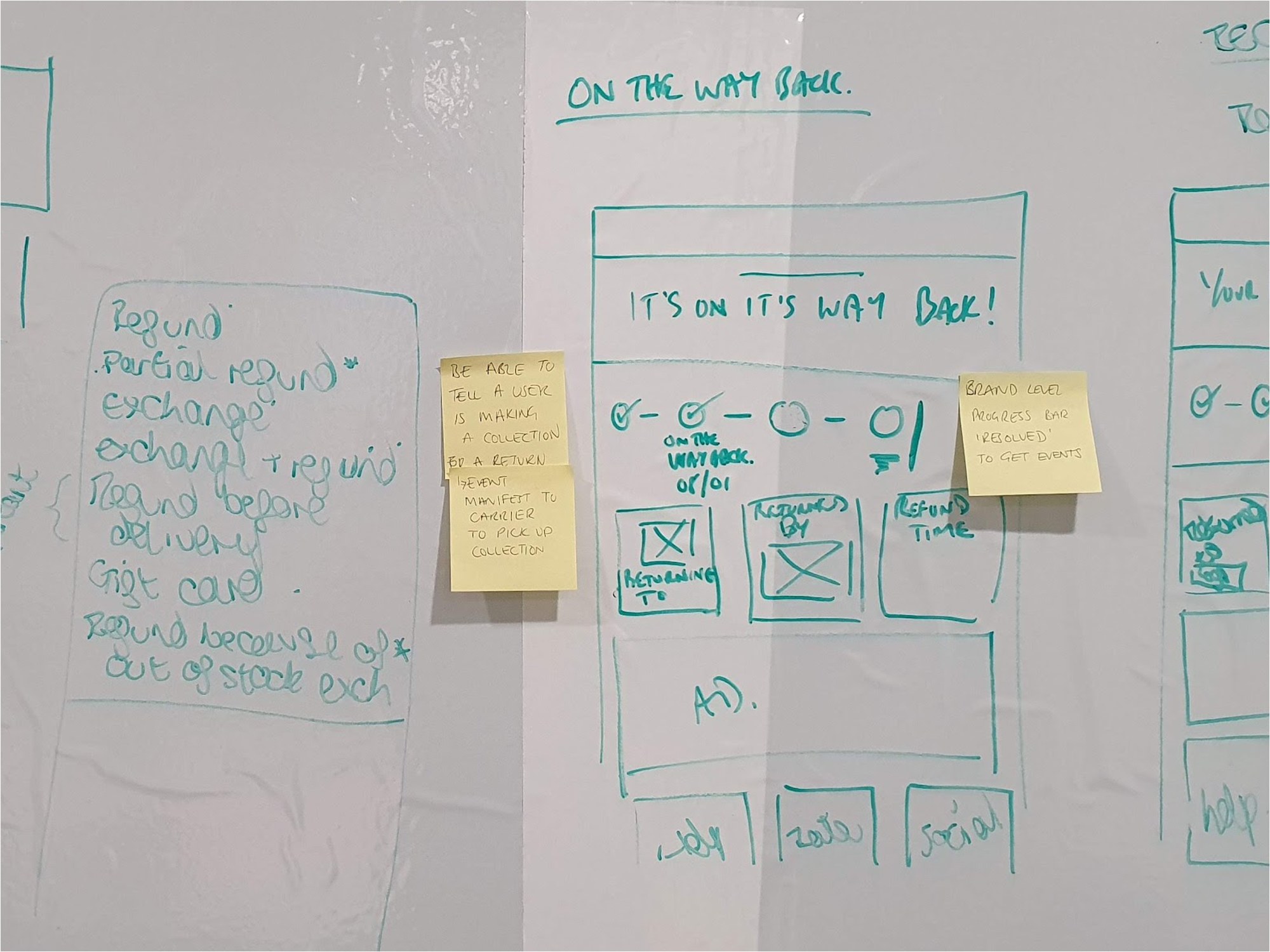
Ran co-design workshops with product managers, engineers and subject-matter experts, sketching the experience together and agreeing the principles the product would be held to, designing for certainty among them.
Tested prototypes with retailers and with shoppers separately. The two had different questions, and the product had to satisfy both.
Architected a design system that carried a retailer’s brand through theming, with no code injection, and a contribution model so it could grow as increments shipped. Designed the admin console alongside it, where retailers manage and publish their branded tracking across sub-brands.
Outcome
Cut customer delivery enquiries by 40% for retailers including ASOS, H&M, Barbour and The Royal Mint.
Won Innovation at the World Post & Parcel Awards 2021.
Artefacts



Next case study